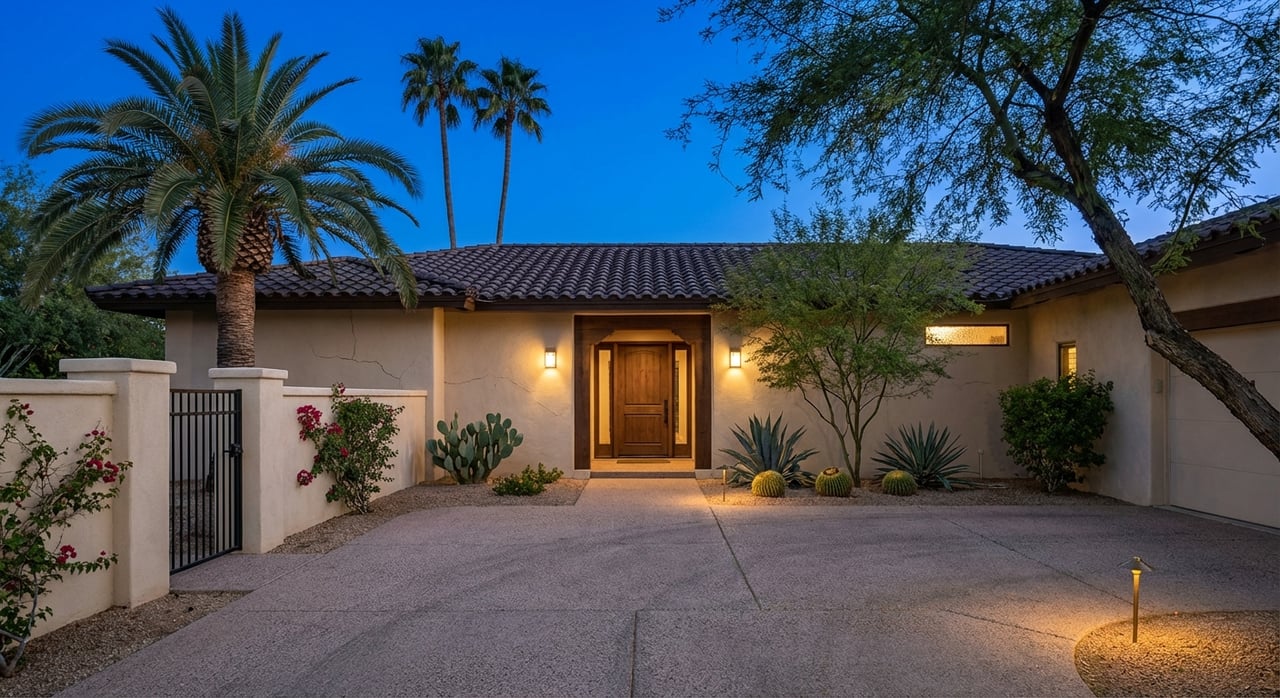
If you love classic Vegas character but still want space, privacy, and access to the city’s best culture, you might be debating Rancho Circle versus the downtown historic districts. It is a real choice: estate living on acreage in the center of the valley or walkable vintage neighborhoods close to Fremont Street and the Arts District. In this guide, you’ll get a clear look at architecture, lot size, lifestyle, renovation rules, and how these areas compare with master-planned communities like Summerlin and Henderson. Let’s dive in.
What makes Rancho Circle unique
Rancho Circle is a small, guard-gated vintage enclave in central Las Vegas, commonly cited as having roughly three dozen homes on large lots that range from about an acre to several acres. Local reporting highlights mature trees, privacy, and custom or mid-century estate properties, with historically low turnover compared with typical subdivisions. These traits create an estate-like setting right in the middle of the valley. You can learn more about the enclave’s scale and character from this Las Vegas Review-Journal feature on Rancho Circle.
How Las Vegas historic districts work
The City of Las Vegas maintains a local Historic Property Register and several locally designated historic districts, including John S. Park and Beverly Green. If a property sits on the register or inside a local district, exterior changes that require a building permit often need a Certificate of Appropriateness through the city’s historic design review. The city outlines the process, including which items can be approved administratively and which require commission review, on its Historic Preservation page and in its How to Apply to Alter a Historic Property guide.
Architecture and lot sizes
- Rancho Circle: Custom and mid-century estate homes on expansive, landscaped lots with an emphasis on privacy and space. The look and feel read as refined and secluded in a central location. Reporting and listings note large, tree-lined parcels and a guard-gated entrance. For context, see the Review-Journal overview of the enclave’s homes and acreage.
- Historic districts: Predominantly mid-century ranch and mid-century modern homes from the 1940s to 1960s. Typical single-family lots are smaller than Rancho Circle, often in the roughly 0.14 to 0.22 acre range based on representative listings, though individual properties vary. Some downtown resources also include earlier revival styles and Art Deco or Aztec Moderne institutional architecture.
Lifestyle and location
Rancho Circle sits in the central valley, placing you within a short drive of the Strip and regional arts and entertainment. The guard-gated setting and mature landscaping offer a quiet, estate-forward lifestyle with city conveniences nearby.
Downtown historic districts put you close to the city’s cultural anchors, including Fremont Street, museums, and the Arts District. If you value vintage architecture, walkable streets, and quick access to downtown events, these neighborhoods deliver that urban-influenced lifestyle with a strong identity.
Rancho Circle vs. Summerlin and Henderson
Master-planned communities such as Summerlin and many Henderson neighborhoods offer a different value proposition. They emphasize abundant amenities, trail networks, parks, community centers, shopping nodes, and consistent design standards, with higher new-home inventory. Summerlin has even been recognized nationally for new-home sales, reflecting its amenity-rich planning and village structure, as noted in Summerlin’s ranking report.
Here is the practical trade-off you will want to weigh:
- Character and lot scale: Rancho Circle and the historic districts offer distinctive homes, mature landscaping, and strong neighborhood identity. In Rancho Circle, you also get rare privacy and acreage in a central location.
- Amenities and predictability: Summerlin and Henderson communities deliver turnkey facilities, newer construction, and more standardized governance, which many buyers prefer for day-to-day convenience.
- Inventory dynamics: Vintage properties can be scarce and highly sought after when they hit the market. Master-planned areas typically see more frequent turnover and a range of price points.
Renovation, preservation, and approvals
If you plan exterior work on a home that is locally designated or on the city’s Historic Property Register, you may need to secure a Certificate of Appropriateness before pulling a building permit. The city’s design review guide and application explains what requires review, the documents you must submit, and the expected timeline.
For tax incentives, the federal 20 percent Rehabilitation Tax Credit is designed for certified historic, income-producing buildings. Owner-occupied single-family residences generally do not qualify unless the use changes to income-producing. Nevada’s SHPO outlines eligibility on its historic tax credits page, and the National Park Service explains accepted approaches under the Secretary of the Interior’s Standards for Rehabilitation. If you hope to use incentives, verify your project’s eligibility before you build your budget.
Vintage home upkeep and efficiency
Mid-century homes can present common upgrade needs. Buyers often budget for improvements like insulation, HVAC replacements or heat-pump retrofits, window upgrades, and electrical or plumbing updates. For an overview of typical energy-efficiency priorities in mid-century homes, see this practical guide to upgrades and retrofit focus areas. These improvements can significantly boost comfort and reduce operating costs, but they require upfront planning.
Water and landscaping realities
Large lawns and mature irrigation systems are part of the charm in older neighborhoods, but they come with water costs and regulations in Southern Nevada. The Southern Nevada Water Authority enforces seasonal watering restrictions and offers turf-replacement rebates that encourage water-smart landscaping. Review current rules and incentives on the SNWA website, and factor irrigation costs, potential conversions, and water-waste fines into your long-term budget.
Buyer checklist for these neighborhoods
Use this quick list when evaluating a home in Rancho Circle or the historic districts:
- Confirm if the property is on the local Historic Property Register or inside a designated district, and whether exterior work will need a Certificate of Appropriateness. Start with the city’s Historic Preservation page and the application guide.
- Order a thorough home inspection that addresses vintage-home systems, including roof type, electrical panels and wiring, plumbing supply and drain lines, HVAC, insulation, and window assemblies.
- Build an efficiency plan. If original single-pane windows or dated HVAC remain, request estimates for prioritized upgrades. This mid-century efficiency guide outlines common approaches.
- Clarify HOA, gate, and guard requirements and any associated fees if you are pursuing a property in a gated enclave.
- Review water rules, watering schedules, and rebate options through the SNWA.
- If you hope to leverage historic incentives, verify eligibility with the Nevada SHPO before assuming any credits will apply.
Is this lifestyle right for you?
Choose Rancho Circle if you want space, privacy, and a rare estate setting in the center of the valley. Choose a downtown historic district if you value mid-century character, modest lot sizes, and proximity to the Arts District and Fremont Street. Consider Summerlin or Henderson if you prioritize new construction, parks and trails, and a predictable amenity framework.
If you are weighing these options, you do not have to decide alone. With two decades of local expertise across both vintage and master-planned communities, I can help you compare properties, coordinate due diligence, and move quickly when the right listing appears. Ready to explore your fit? Let’s talk about your goals and timeline.
Looking for tailored guidance and a confidential, concierge plan for your next move? Connect with Jill Alegre to get started.
FAQs
What is Rancho Circle best known for in Las Vegas?
- Rancho Circle is a small guard-gated enclave with roughly three dozen custom and mid-century estate homes on large, tree-lined lots that offer privacy and space in a central location, as noted by local reporting.
How do historic districts affect exterior renovations in Las Vegas?
- If a home is locally designated or on the city’s Historic Property Register, exterior work that requires a building permit may also need a Certificate of Appropriateness through the city’s historic design review, per the city’s guidance.
Do federal historic tax credits apply to owner-occupied homes?
- The federal 20 percent Rehabilitation Tax Credit generally applies to certified historic, income-producing properties, not typical owner-occupied single-family residences, according to SHPO and the National Park Service.
How do water rules impact older lawns and landscaping in Las Vegas?
- The Southern Nevada Water Authority enforces seasonal watering restrictions and offers turf-replacement rebates, so you should plan for compliance and consider water-smart conversions to manage costs.
How do Rancho Circle and Summerlin differ day to day?
- Rancho Circle offers privacy, acreage, and custom architecture in a central setting, while Summerlin emphasizes extensive amenities, newer construction, and a village framework with parks and trails supported by a master plan.